

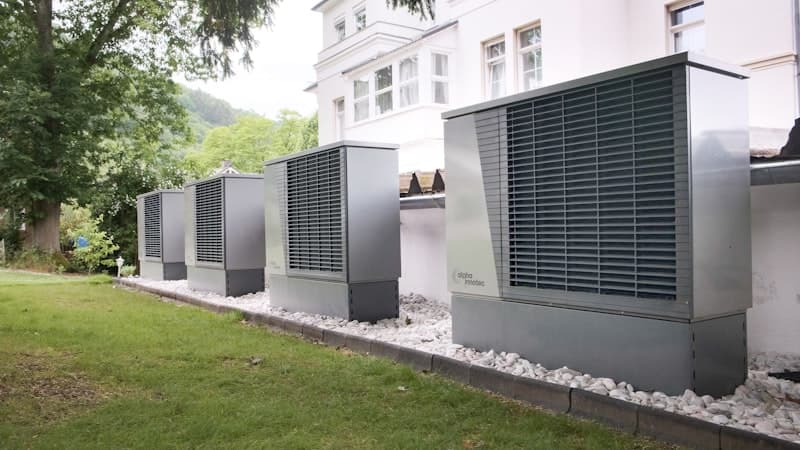
What Is a Heat Pump?
A heat pump is a heating system that moves thermal energy from one place to another, rather than burning fuel to generate heat. Air source heat pumps (ASHPs) extract heat from the outside air and transfer it into your home via a refrigerant cycle — even when outdoor temperatures drop as low as -20°C.
The Refrigeration Cycle Explained
Heat pumps work using the same basic principle as a refrigerator, but in reverse:
- Evaporation: Cold liquid refrigerant passes through an outdoor coil (the evaporator). It absorbs heat from the air and evaporates into a gas.
- Compression: An electric compressor pressurises the refrigerant gas, raising its temperature significantly.
- Condensation: The hot, high-pressure gas passes through an indoor heat exchanger (condenser), releasing heat into your home's heating system before condensing back to liquid.
- Expansion: The liquid passes through an expansion valve, reducing its pressure and temperature, ready to repeat the cycle.
Coefficient of Performance (CoP)
The efficiency of a heat pump is measured by its Coefficient of Performance (CoP). A CoP of 3 means the system produces 3 kW of heat for every 1 kW of electricity consumed — 300% efficiency. In mild UK weather, modern heat pumps achieve CoP figures between 3 and 4.5. This compares favourably with the best condensing gas boiler, which achieves around 92% efficiency.
Air Source vs Ground Source
Air source heat pumps are the most common type installed in UK homes. They are easier to install and less expensive than ground source heat pumps, which extract heat from buried ground loops. Ground source systems offer slightly higher and more consistent CoP but require significant outdoor space for the ground collector.
What Does a Heat Pump Heat?
Heat pumps work best with low-temperature heating systems such as underfloor heating or large-panel radiators. They can also heat your domestic hot water via a hot water cylinder. Most modern systems include a backup electric immersion heater to supplement hot water during peak demand.
Do Heat Pumps Work in Cold Weather?
Yes. Modern ASHPs are designed to operate effectively at outdoor temperatures as low as -15°C to -20°C. Performance does reduce slightly in very cold weather, but the system continues to provide efficient heating. In the UK, where average winter temperatures rarely drop below -5°C, heat pumps perform excellently throughout the year.
Regular Servicing Keeps Efficiency High
Like any mechanical system, heat pumps require annual servicing to maintain peak efficiency. A service checks refrigerant levels, cleans the evaporator coil, tests the compressor, and ensures the controls are calibrated correctly. Skipping annual services can reduce CoP by 10–15% and shorten the unit's lifespan.
Tags: